A whole summer hitchhiking through the Middle East👍🚗
After riding motorcycles through South America the summer before, we wanted to do something even more unpredictable. The idea was simple: get from Lebanon to Afghanistan, as far as possible by hitchhiking and without paying for transport or accommodation. Along the way we would try to stay with local people and experience the countries through the people we met.
The planned route ran through Lebanon, Syria, Jordan, Iraq, Iran and Afghanistan. We had no exact plan for how to get between the places, that was the whole point. We would write our destinations on pieces of cardboard, stand by the road and see who stopped. When we could not find anywhere to stay, we would camp.
We chose the Middle East because we wanted to see the region with our own eyes. In Sweden many of these countries are mainly associated with war, conflict and insecurity. We did not want the news to be the whole picture, so we went to meet the people who actually live there and form our own opinion.
It quickly turned out that hitchhiking was far easier than we had imagined. We almost never waited more than a few minutes before someone stopped. People did not only offer rides, they often invited us home, fed us and connected us with friends and family further along the route.
The trip became much more than a journey between countries. It became about the people we met and the enormous hospitality we experienced along the way.
Lebanon🇱🇧
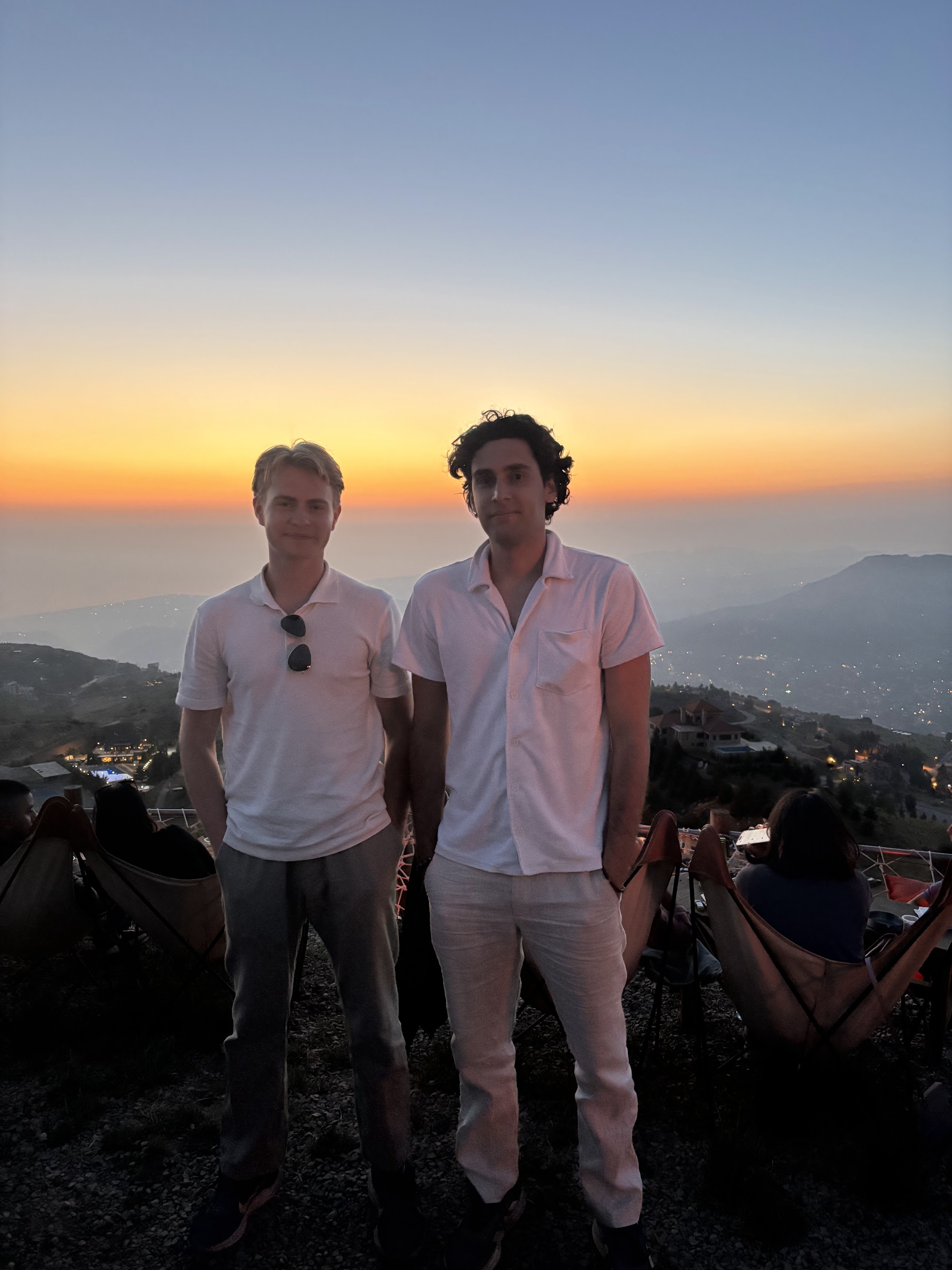
Lebanon was the starting point. We landed in Beirut and began making our plan real: heading east through the region without paying for transport and staying with local people wherever we could.
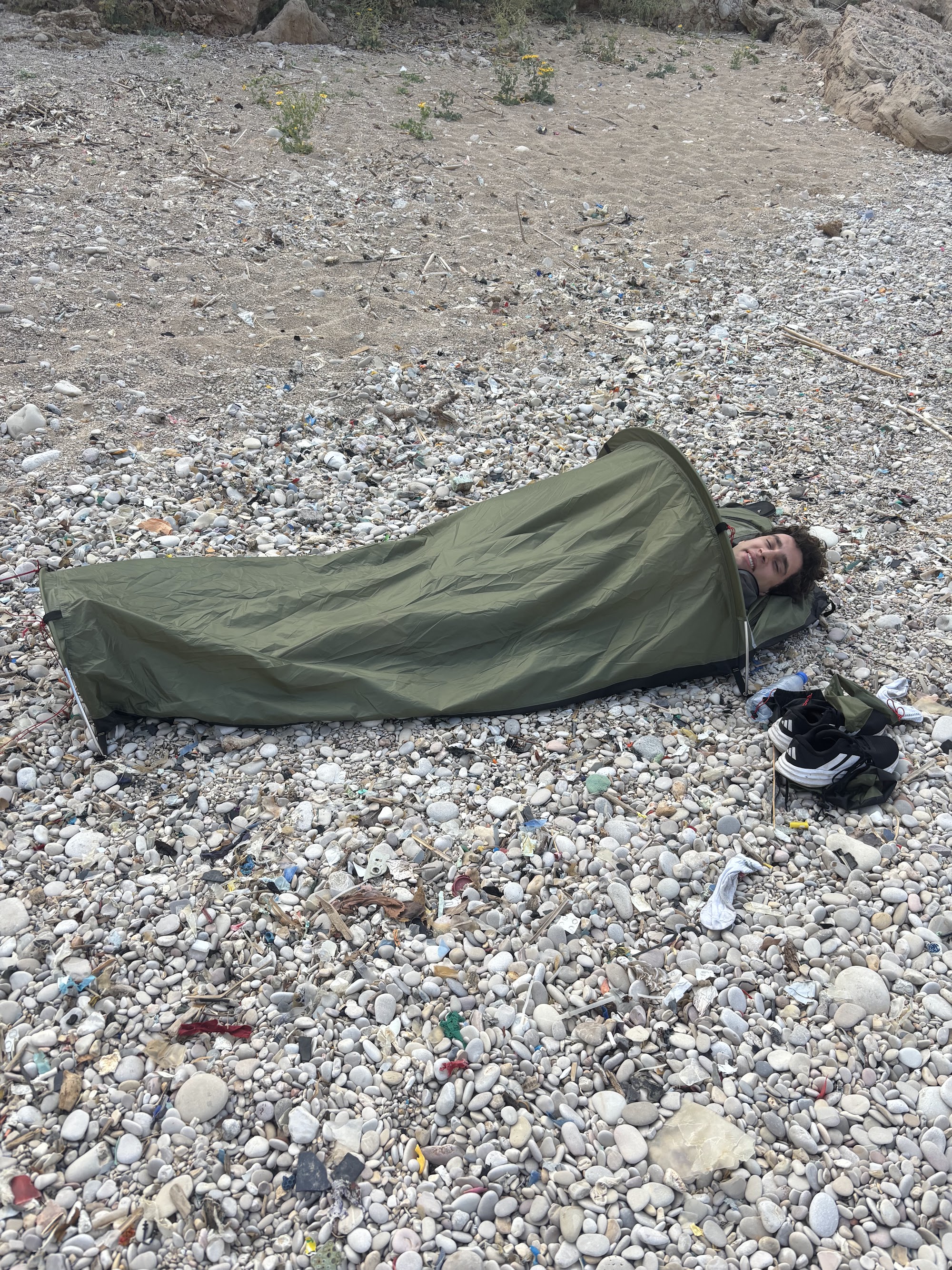
People started helping us right away. By posting our updates on social media we also received messages from people offering us a place to stay with them or with friends and relatives in other cities. We carried a tent and air mattresses as a backup for the nights we could not find anywhere to sleep.
Lebanon became the start of what would be a recurring theme for the whole trip: people we had never met were ready to open their homes to us.
Syria🇸🇾
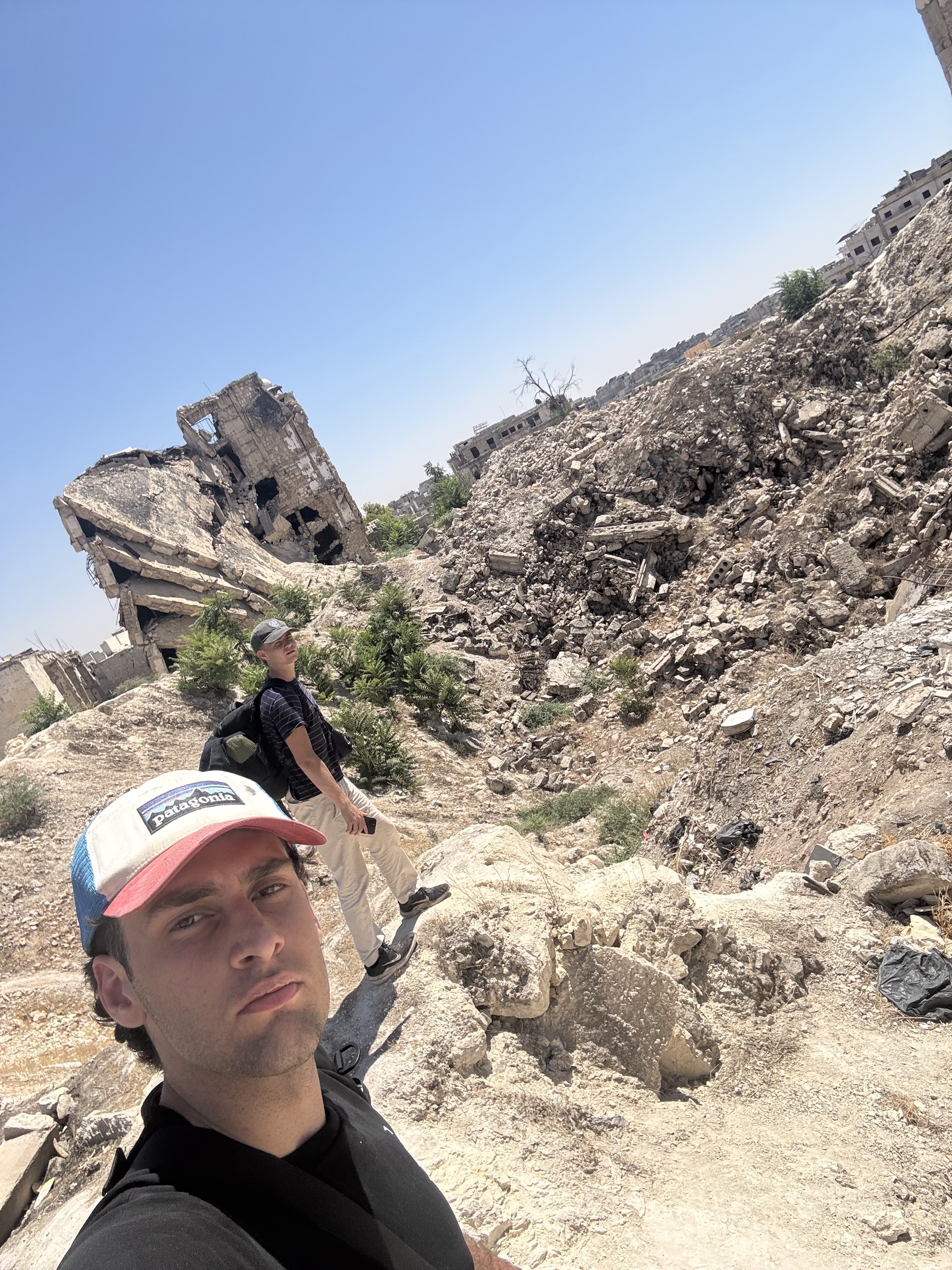
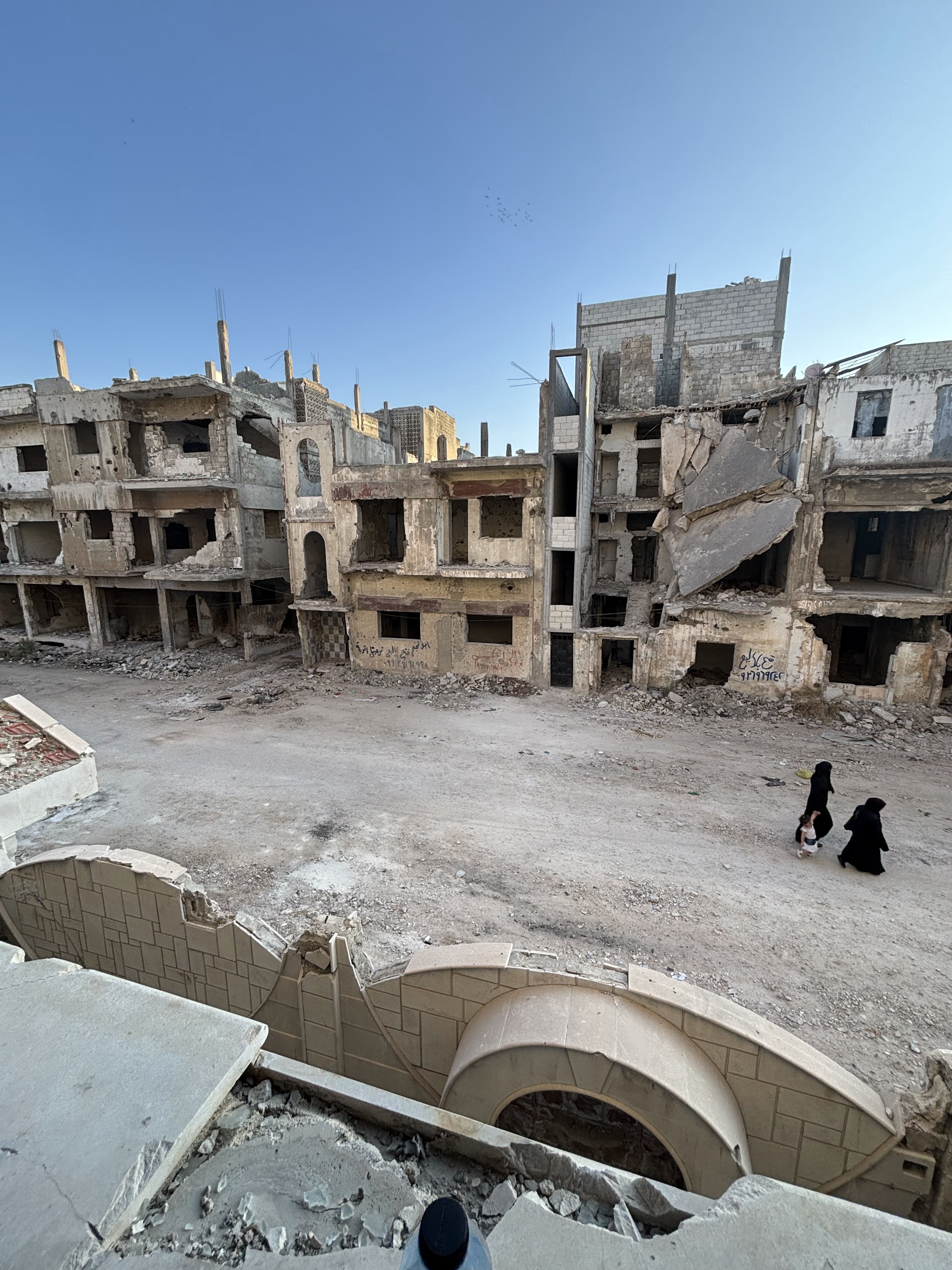
From Beirut we hitchhiked on to Damascus and then north towards Homs and Latakia. Syria was one of the countries we were most curious about, because you constantly hear about the war there but very little about the people.
In Latakia we met a group of young guys, Ibrahim, Hasan, Ali and Talal, who we quickly became close with. We ended up working at a restaurant and a cafe and even joined dentistry students at their university. Ibrahim gave us the key to his apartment and told us to use it whenever we wanted.
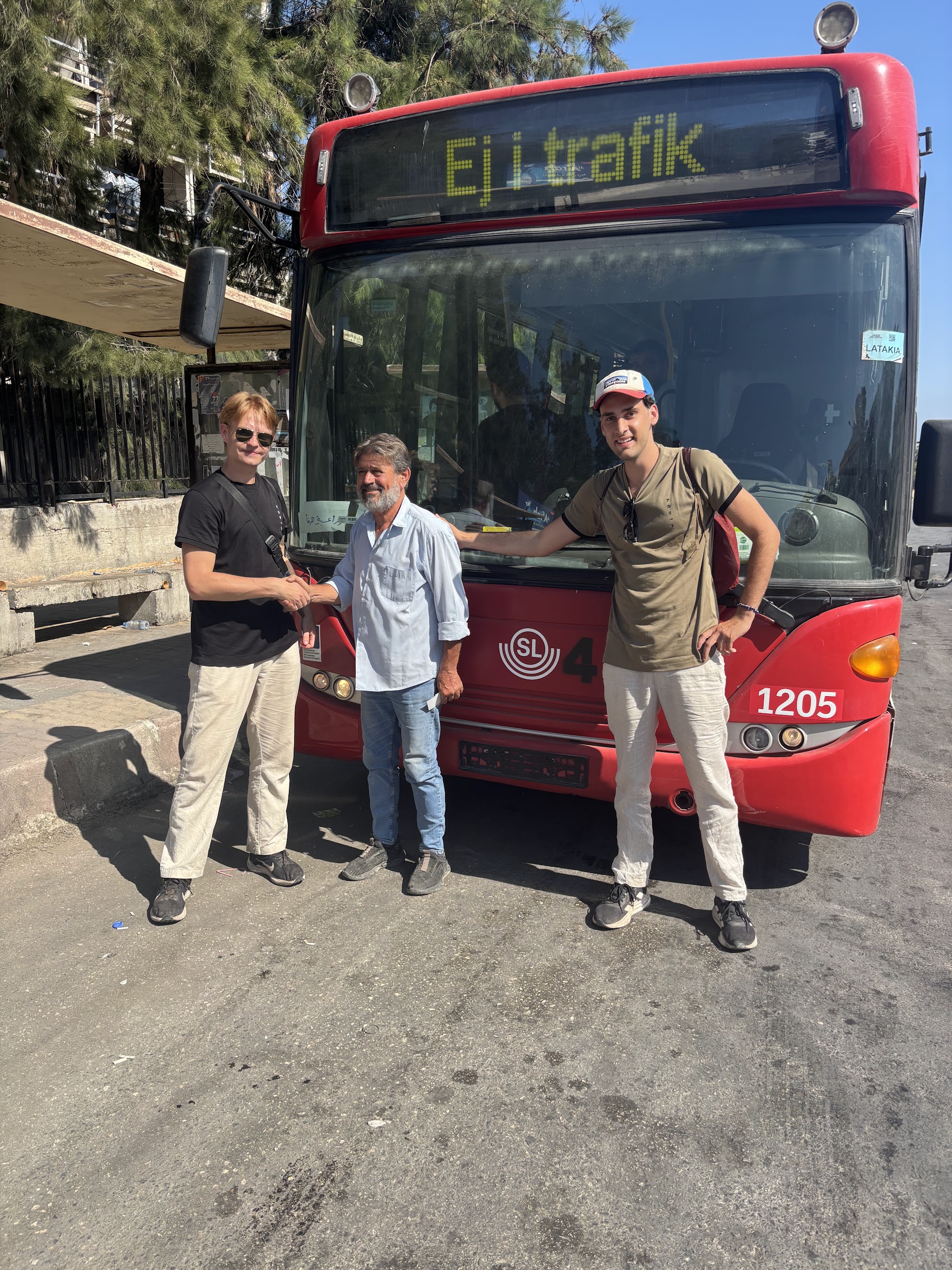
One of the most absurd moments of the trip happened here too. On a street in Latakia we suddenly saw a Swedish SL bus. At first we thought we were seeing things, and David even pulled out his SL card wondering whether it would actually tap. The moment went viral and was later covered by SVT among others.
Syria was also where we saw how fast strangers can become friends. We met people who, despite coming from a completely different culture, had the same humour, energy and curiosity as us.
Jordan🇯🇴
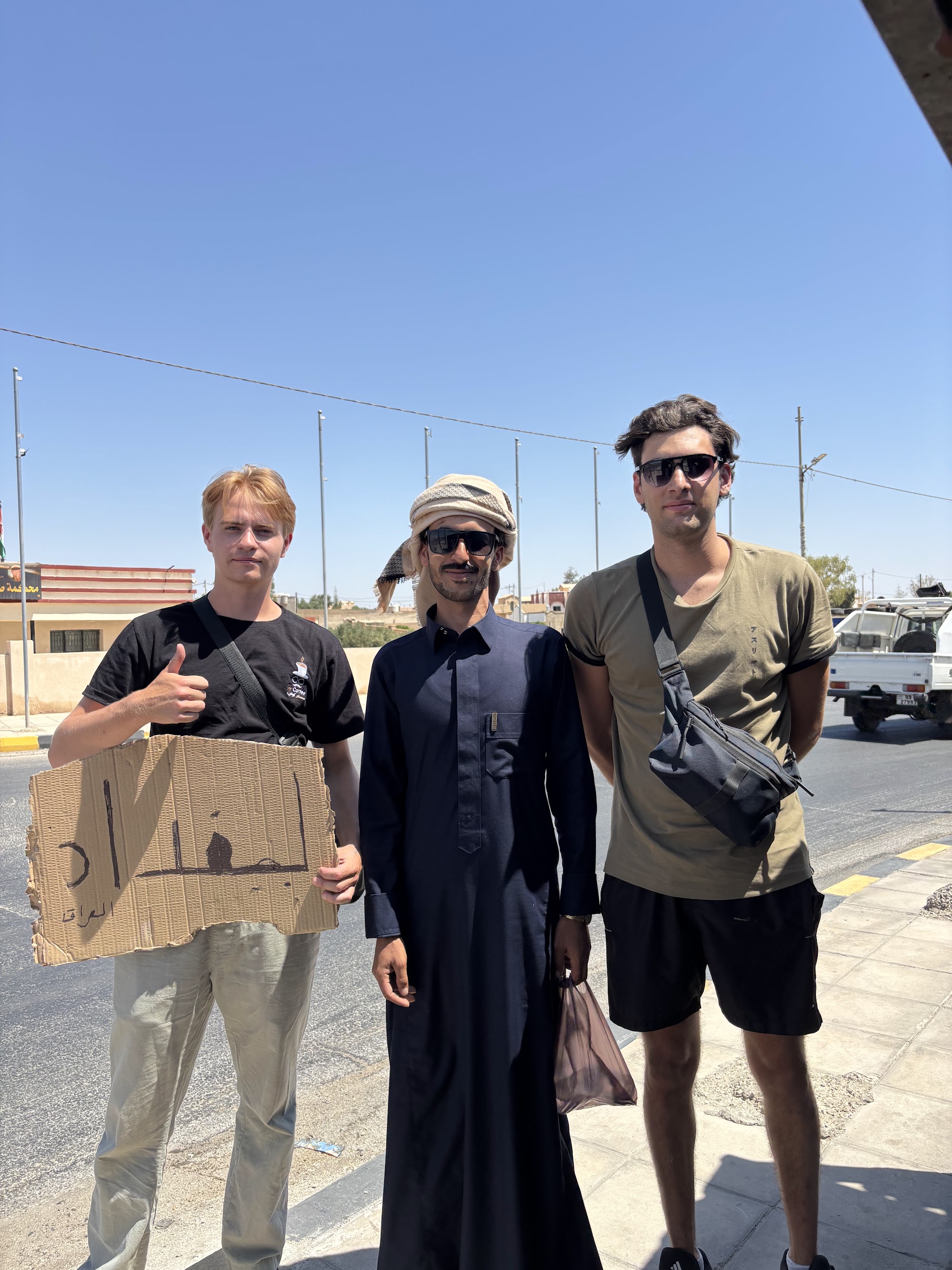
After Syria we continued south to Jordan. We kept hitchhiking with the same simple method: cardboard, a marker and a destination written in Arabic.
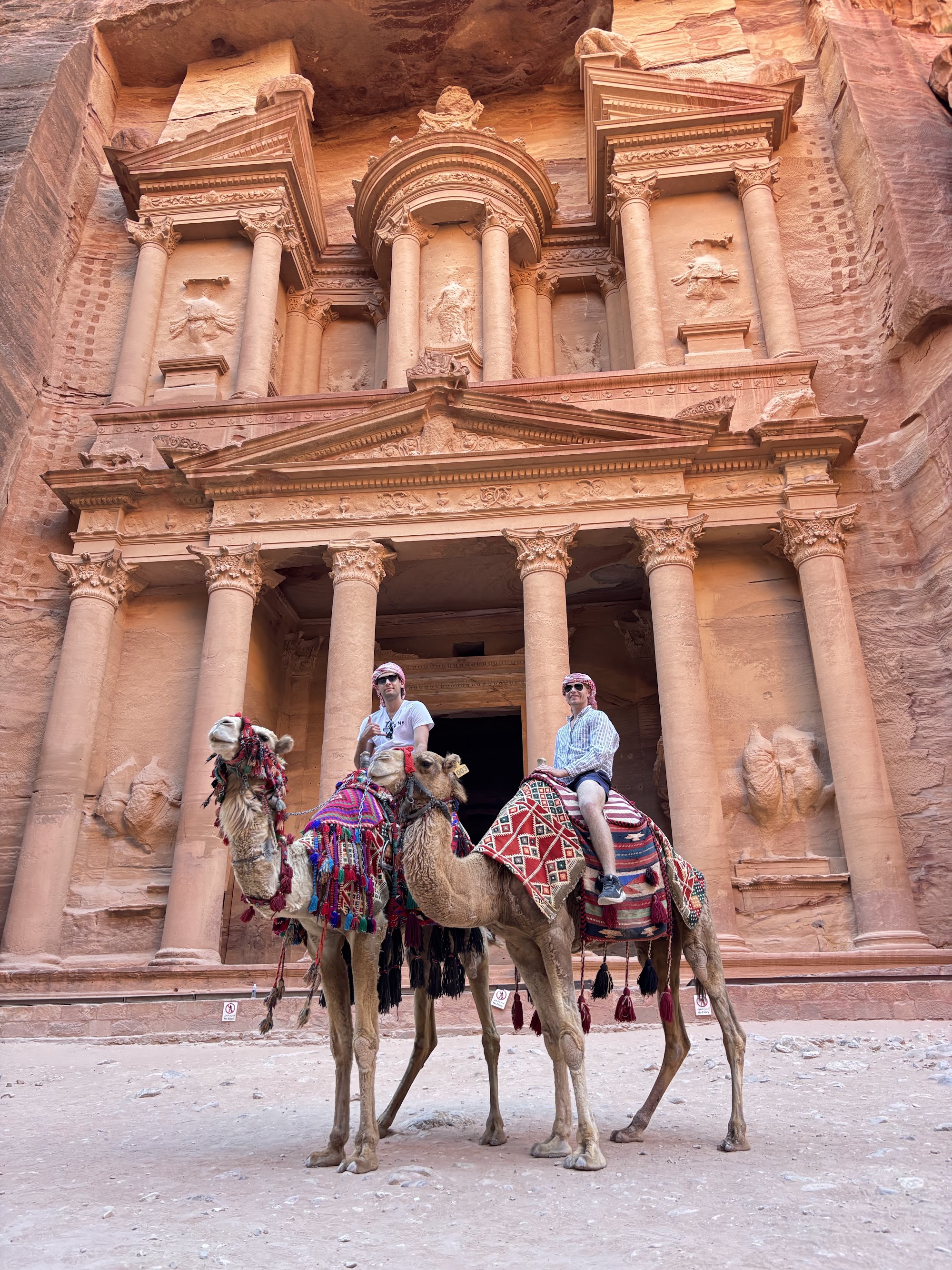
We visited Petra, but one of the strongest experiences in Jordan was again about the people we met.
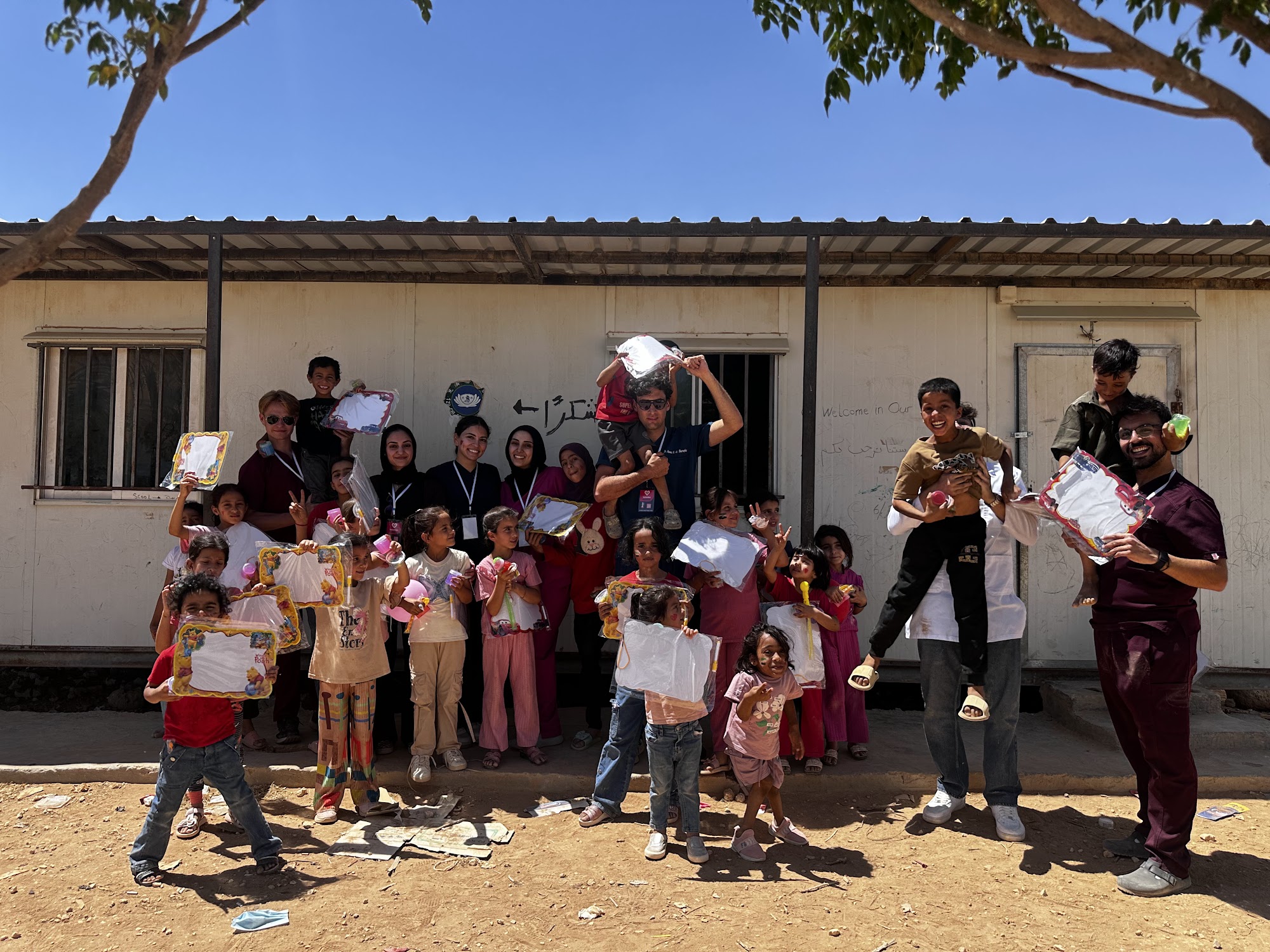
Together with dentistry students we visited a Syrian refugee camp, where we helped with work on the children's dental health. It was a completely different side of the trip from the classic tourist experiences and let us see a part of the region we would otherwise never have come close to.
Iraq🇮🇶
From Jordan we continued east into Iraq. Ahead of us was one of the longest stretches of the trip, almost 1 000 kilometres through the desert towards Baghdad, straight through the Triangle of Death.
We had expected it to be hard to get rides in the desert, but it was almost the opposite. For the first 300 kilometres we barely had to ask. When we stopped at a petrol station to buy breakfast, people came up and asked if we wanted to ride with them.
At the border we discovered that our Iraqi visas had expired. Even so it worked out and we could buy new visas on the spot. The driver who had taken us there waited patiently for several hours while everything was sorted out.
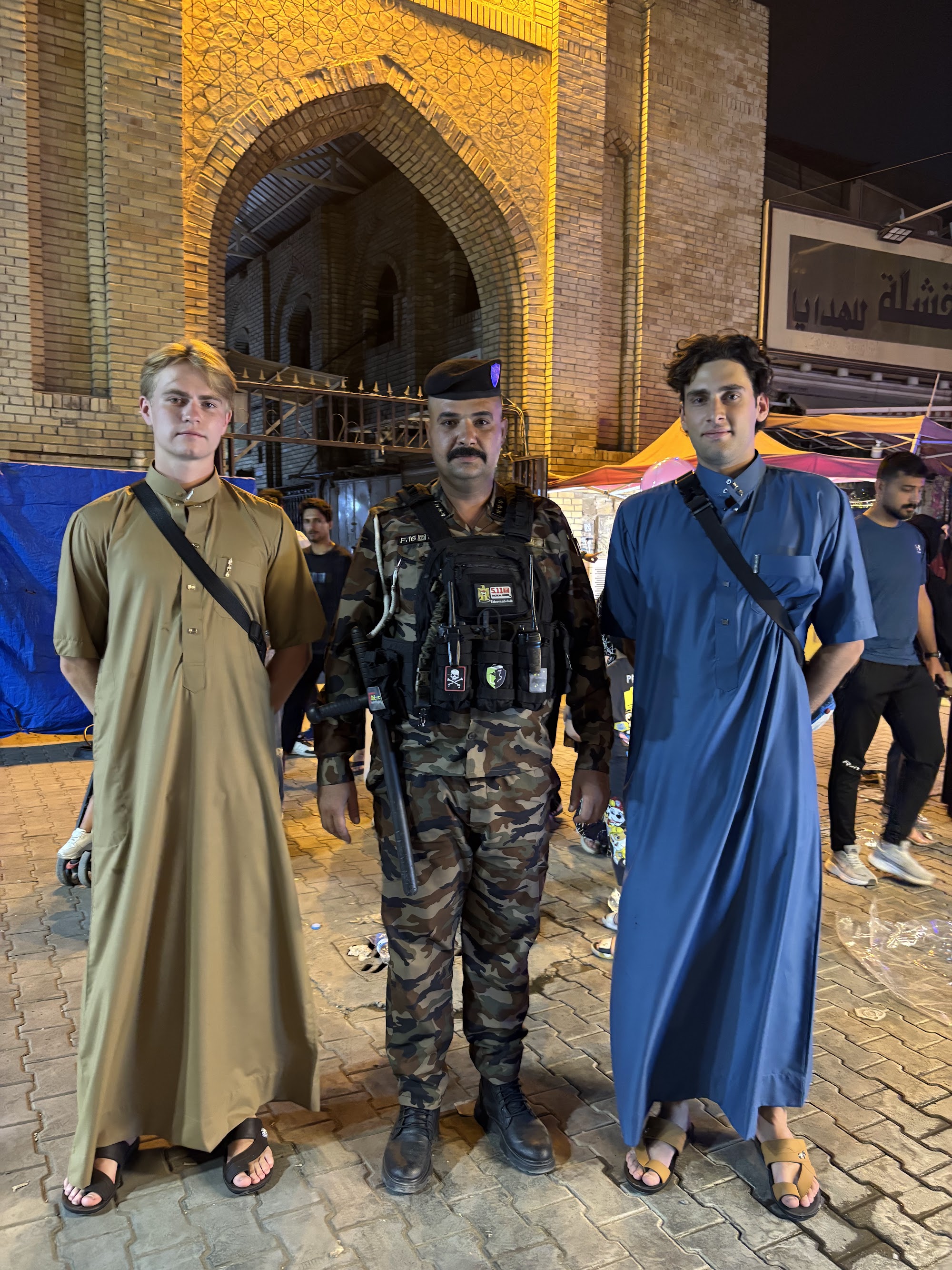
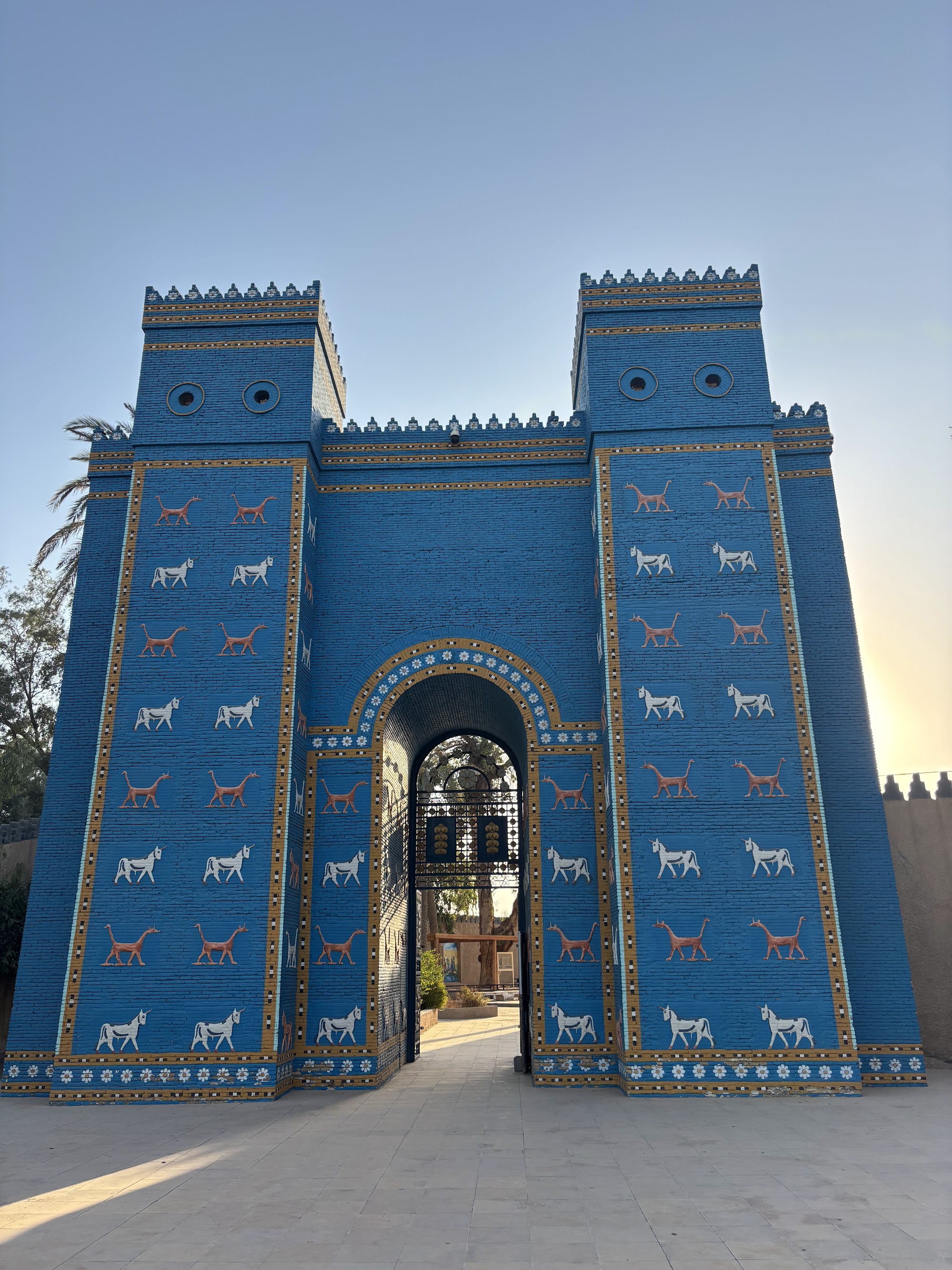
When we later reached Baghdad, an Iraqi family who are friends of David's family back in Sweden had arranged accommodation for us. What was meant to be one night became several days. The family insisted we stay longer, ate with us and showed us around the city.
Another highlight was joining the Swedish-Iraqi footballer Pashang Abdulla at the Iraqi cup final. Pashang's team Duhok won the final and we got to celebrate with the team and hold the trophy.
We had originally planned to continue through Iran to Afghanistan, but the situation in Iran changed drastically during the trip. After the US bombings of Iranian nuclear facilities we judged that it was no longer suitable to travel through the country. We changed the route and flew from Iraq to Pakistan.
Pakistan🇵🇰
Pakistan was not part of the original route. But when Iran fell away, Pakistan became our new way towards Afghanistan.
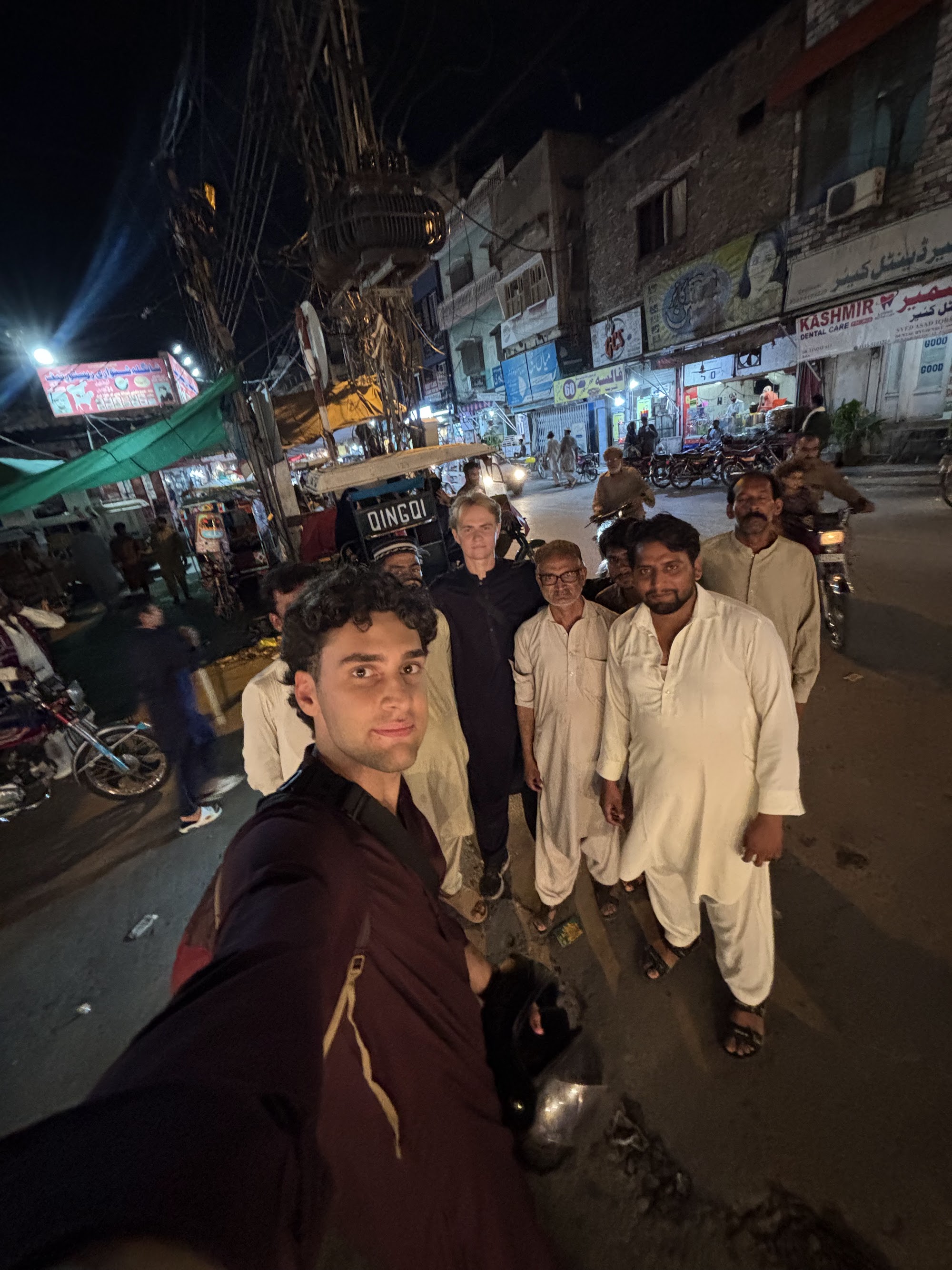
The pattern from the rest of the trip continued here too. Someone who followed us on Instagram had seen our updates and got in touch. He offered us a place to stay with his cousin in Islamabad. The cousin picked us up at the airport and took us home.
During our stay we met his friends, who in turn offered to lend us both a car and motorcycles. It was another example of how our social media became part of the trip itself, people who had followed us online suddenly became our contacts on the ground.
As we approached Afghanistan we were invited for tea and cakes by people we met along the road.
Afghanistan🇦🇫
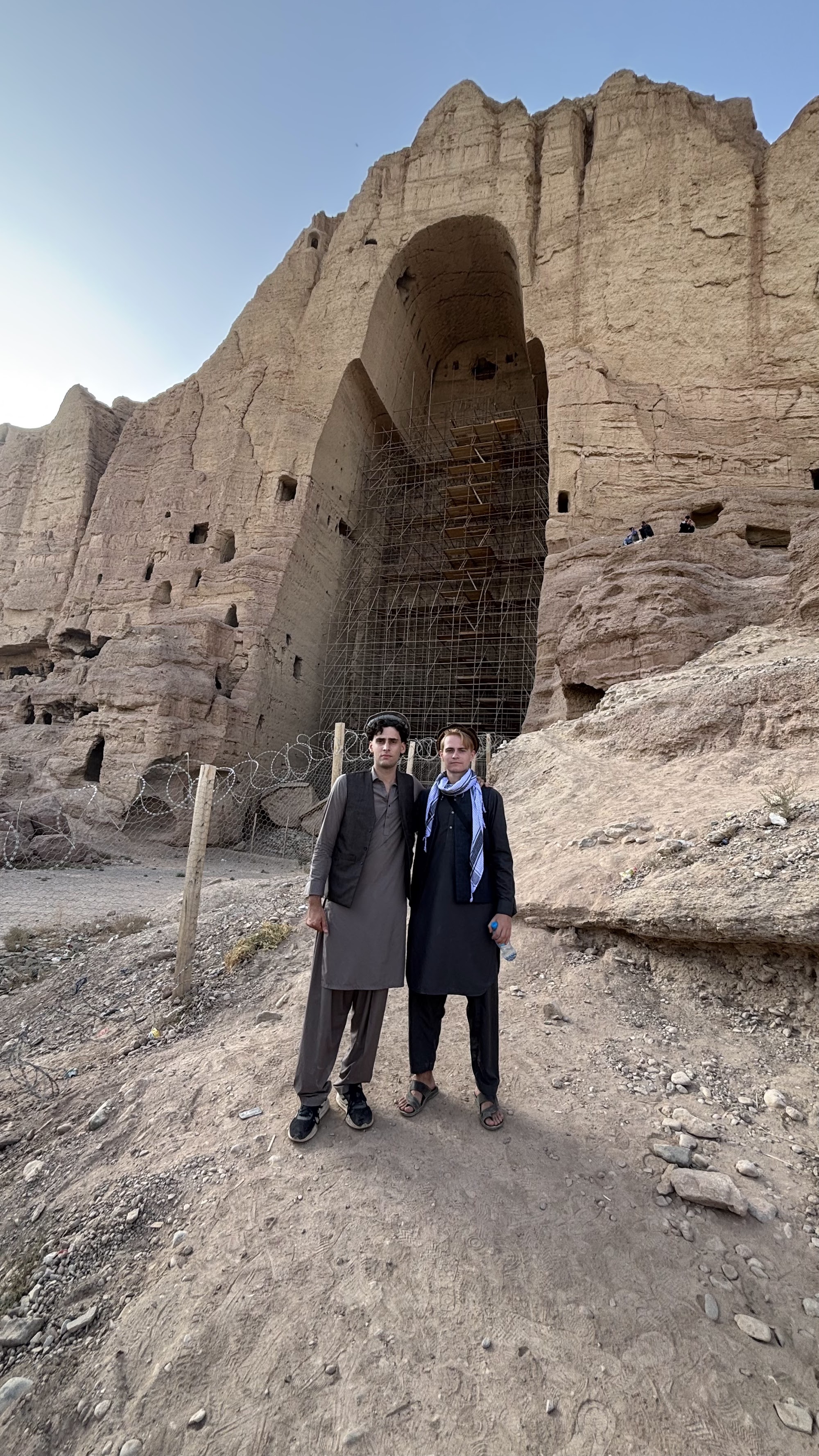
Afghanistan was the final destination and also the country that gave us the strongest contrasts of the whole trip.
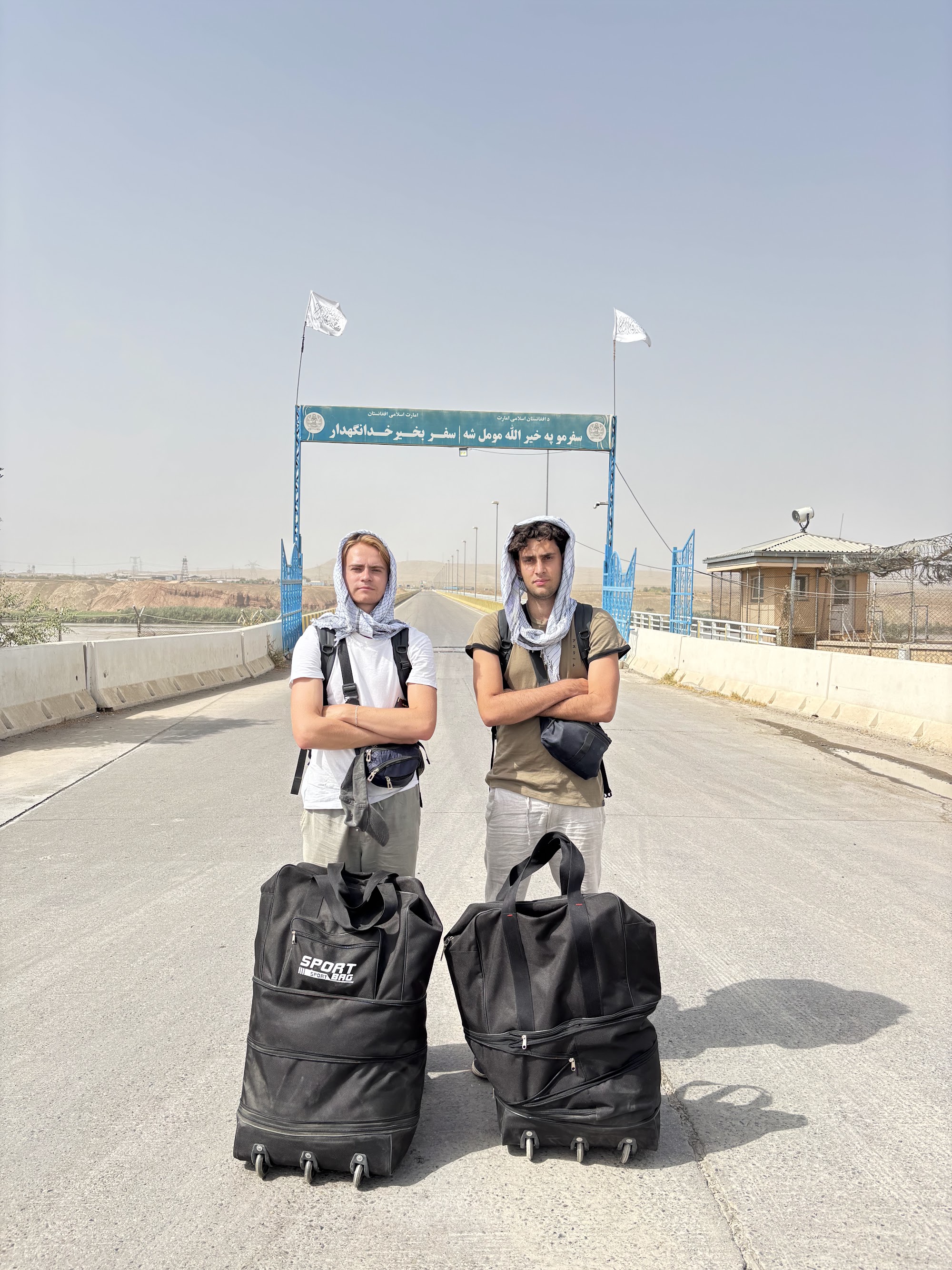
We had decided from the start to make it all the way to Afghanistan, and after a few days in Pakistan our visas were ready. We headed for the border and then continued towards Kabul.
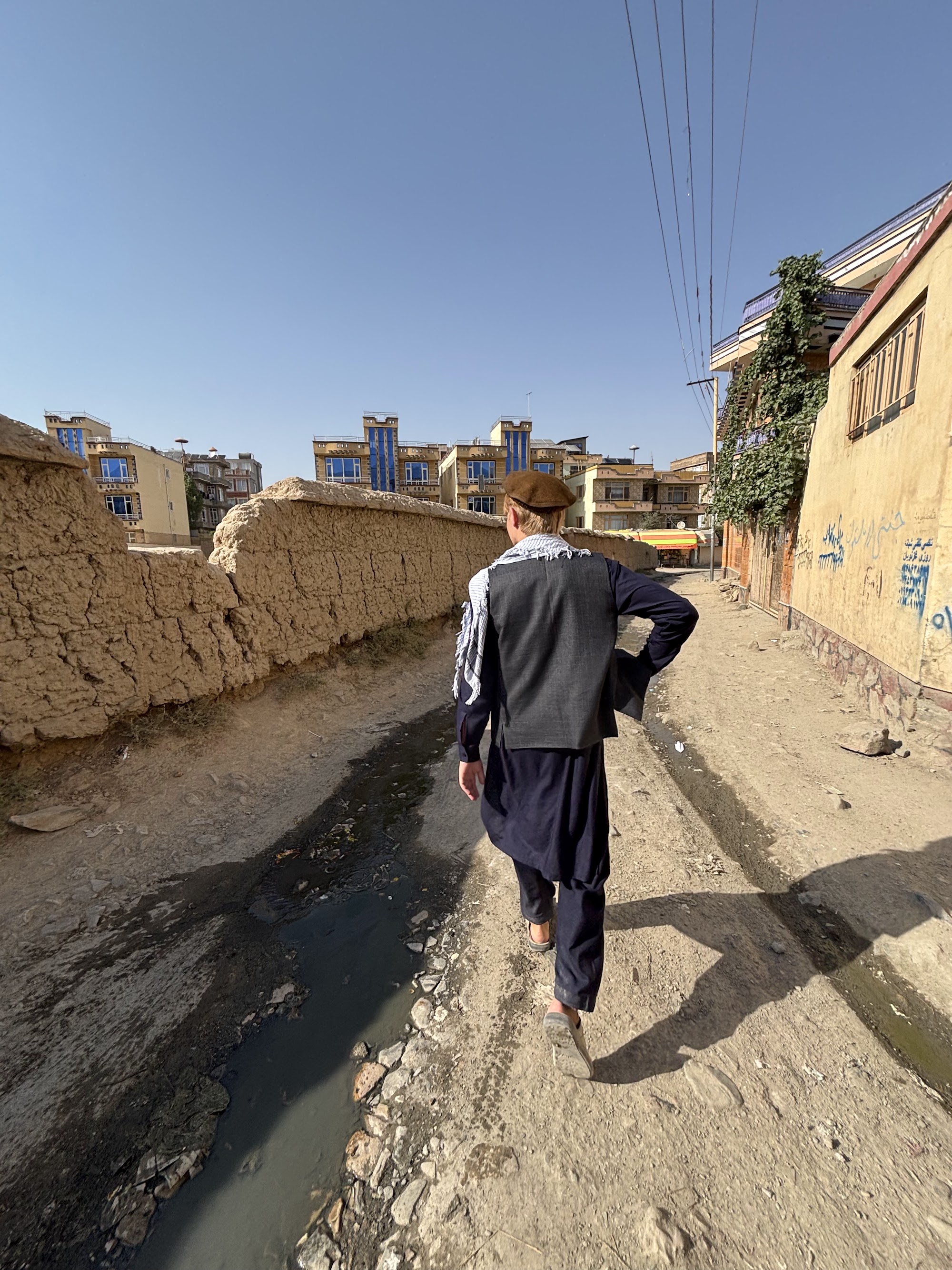
The atmosphere changed right at the border. The roads got worse, the infrastructure simpler, and the first feeling was far more threatening than in the previous countries. But here too our picture changed quickly.
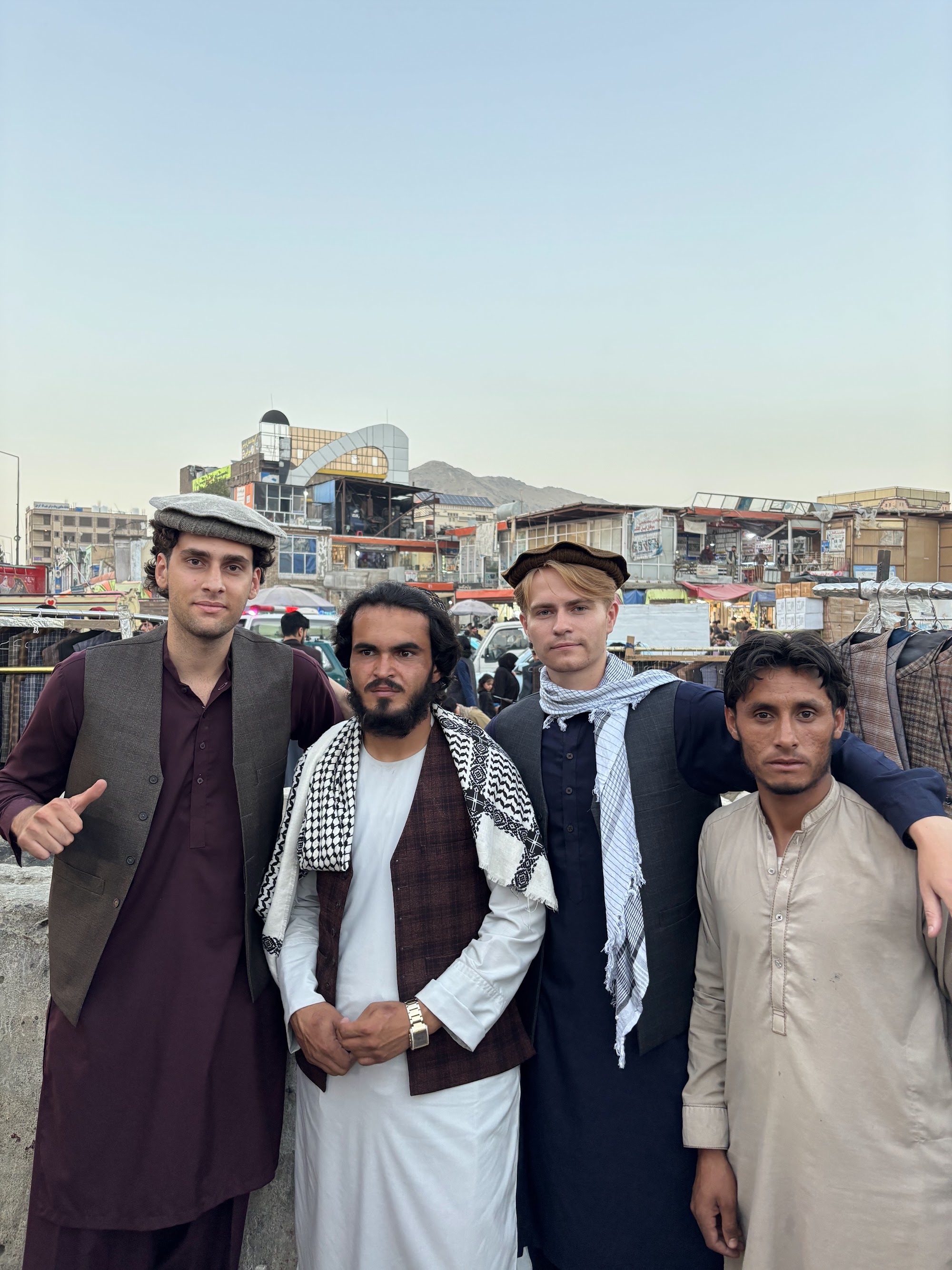
David already had a close relationship with an Afghan guy his family in Orebro had taken in when David was younger. He had become like a brother to David and his name was Hadi. Before the trip Hadi contacted people he knew in Afghanistan, so when we arrived there was almost always someone waiting for us. Friends, relatives and acquaintances opened their homes to us.
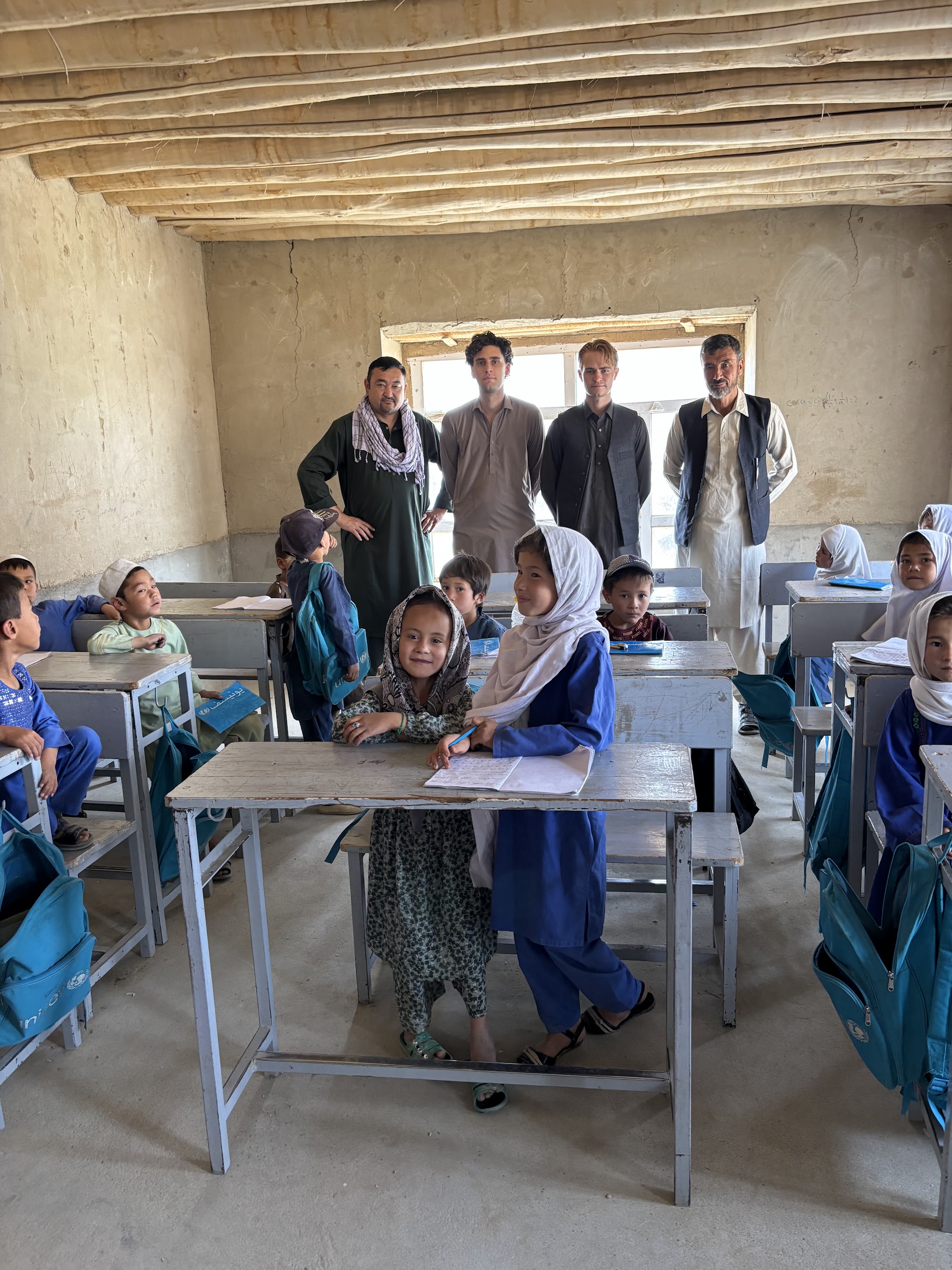
At the same time Afghanistan was the country where we most clearly saw how different everyday life can be. In Kabul and in the countryside we found places where the infrastructure was far simpler than we were used to. In one village people and sheep lived under the same roof, and there was no running water, internet or mobile coverage. In many ways it felt like travelling a hundred years back in time.
We also saw a darker side of the country. Above all, the limited freedom of women became obvious. In the homes we stayed in, men and women were separated and the women could not freely leave the house. We met young women who dreamed of becoming doctors and journalists, but who knew their chances of realising those dreams were very small.
Despite all of this the enormous hospitality continued. Restaurants sometimes refused to let us pay and people did everything they could to help us on our way.
Looking back👀
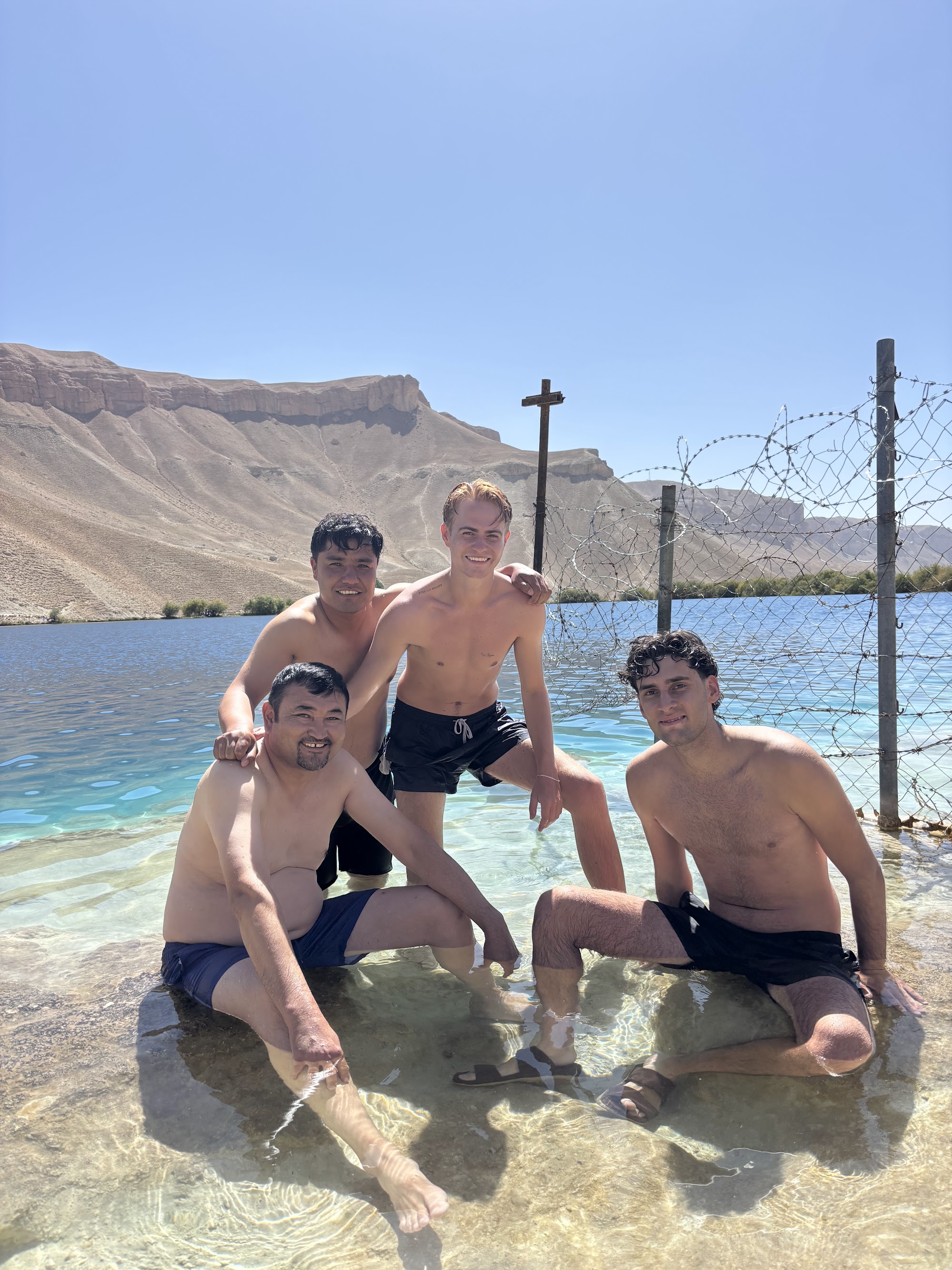
What started as a plan to hitchhike from Lebanon to Afghanistan became something much bigger than we had counted on. We travelled through 6 countries, slept on floors in strangers' homes, camped at petrol stations, worked in restaurants, visited refugee camps, rode with people we had never met and saw places few Swedish travellers ever visit.
But above all we came away with a completely different picture of the people in the region.
We went there to form our own opinion, and what we mostly brought home was how much hospitality, openness and trust we met along the way. As David summed it up afterwards: in the countries we travelled through people talk to each other, even to strangers, and that openness is something we miss back home in Sweden.